
Why Choose Us
Production Market
SUN AUTOMATION GROUP LIMITED was founded in 1986 and had been focusing on exporting high bearing ever since. Our products have been exported to North America, Europe, the Middle East, Brazil, South Africa, and Mexico and were well acknowledged by clients worldwide.
Our Certificate
We cooperate with the bearing branches and some authorized. Our bearings are new and genuine. Certificates signed and stamped by the chamber of commerce certify that all of them are original. To get more information, please kindly contact us.
Production Equipment
The production line has much equipment, including manufacturing and testing machinery. We have an annual output of 5 million sets of bearings. We will check the production equipment regularly to ensure that we can produce higher-quality bearings.
Our Service
We have a 7*24-hour professional sales consultant team to deal with your needs as quickly as possible. We know that time is money, and we will provide you with the best products, best suggestions and services, and the fastest shipping Ways to give you a high-quality and low-cost purchasing experience.
-

GE440-DO
Dimensions: 440*600*218 mmweight:192.6 kgRadial spherical plain bearingE-mial:alita@sgsabearing.com Add to Inquiry -
GEP 240 FS Spherical Plain Bearing
*GEP 240 FS Bearing . *Dimensions: 240x340x170 mm . *Weight: 53.7 Kg . *If you wants to know more Add to Inquiry -
GEP 320 FS Spherical Plain Bearing
*GEP 320 FS Bearing . *Dimensions: 320x460x230 mm . *Weight: 132 Kg . *If you wants to know more Add to Inquiry -
GEP 140 FS Spherical Plain Bearing
*GEP 140 FS Bearing . *Dimensions: 140x210x100 mm . *Weight: 13 Kg . *If you wants to know more GEP Add to Inquiry -
GEZ 400 ES Spherical Plain Bearing
*GEZ 400 ES Bearing . *Dimensions: 101.6x158.75x88.9 mm . *Weight: 6.91 Kg . *If you wants to know Add to Inquiry -
GEG 200 ES Spherical Plain Bearing
*GEG 200 ES Bearing . *Dimensions: 200x290x200 mm . *Weight: 32 Kg . *If you wants to know more GEG Add to Inquiry -
GEG 70 2RS Spherical Plain Bearing
*GEG 70 2RS Bearing . *Dimensions: 70x105x49 mm . *Weight: 1.47 Kg . *If you wants to know more GEG Add to Inquiry -
GE50-SX Spherical Plain Bearing
GE50-SX is Spherical Plain Bearing. The dimension: 50x80x20 mm. The weight:0.449 kg. Welcome to buy. Add to Inquiry -
GE80-SX Spherical Plain Bearing
GE80-SX is Spherical Plain Bearing. The dimension: 80x125x29 mm. The weight:1.539 kg. Welcome to Add to Inquiry -
GE65-SX Spherical Plain Bearing
GE60-SX is Spherical Plain Bearing. The dimension: 65x100x23 mm. The weight:0.759 kg. Welcome to Add to Inquiry -
GE160-SX Spherical Plain Bearing
GE160-SX is Spherical Plain Bearing. The dimension: 160x240x51 mm. The weight:9.4 kg. Welcome to Add to Inquiry -
GE190-SX Spherical Plain Bearing
GE190-SX is Spherical Plain Bearing. The dimension: 190x290x64 mm. The weight:18.3 kg. Welcome to Add to Inquiry


What is Plain Bearing
Plain bearings, also known as bushings, are mechanical elements that support rotating or sliding shafts, rods, or other components. They provide a low-friction surface between the moving parts, reducing wear and increasing efficiency. Plain bearings are typically made of materials such as bronze, steel, or plastic, and can be lubricated with oil or grease to further reduce friction and wear. They are commonly used in a variety of applications, including automotive engines, industrial machinery, and home appliances.
Advantages of Plain Bearings
Low friction
Plain bearings have very low friction, which enables them to operate smoothly and quietly.
Longer life
Unlike other types of bearings, plain bearings do not have any moving parts and are therefore less prone to wear and tear. This makes them last longer.
Low cost
Plain bearings are often less expensive than other types of bearings. This makes them a popular choice for applications where cost is a major factor.
Easy to install
Plain bearings are easy to install and can be used in a wide range of applications.
High load capacity
The load capacity of plain bearings is high, which enables them to support heavy loads without wearing out quickly.
Low maintenance
Since plain bearings do not have any moving parts, they require very little maintenance.
No noise or vibration
Plain bearings operate quietly and do not produce any noise or vibration, making them ideal for applications where noise is a concern.
High reliability
With their simple design, plain bearings are highly reliable and can operate for long periods of time without any problems.
Types of Plain Bearings
1. Types based on bearing load direction
• Radial or journal bearings: In radial bearings, the load runs perpendicular to the direction of motion of the moving parts.
• Axial or thrust bearings: Axial or thrust bearings allow parts to rotate between each other like any other bearing, but are mainly used to support axial loads.
2. Types based on material
• Carbon insert bearings: Graphite is used as a shaft lubricant when the environment is too abrasive for rolling bearings. Cast bronze used in conventional designs is machined to bearing specifications and holes are drilled in the outer and inner surfaces of the casting. These holes are subsequently filled with graphite plugs. Sintered bronze with steel backing and graphite impregnation are some of the variants that allow dry and self-lubricating operation. In addition, graphite bearings are often used in high-temperature environments.
• Carbon plain bearings: Materials consisting of various components, including material classes for bonding and reinforcement, are used to manufacture composite plain bearings. Fine woven fibers impregnated with polymer resins form the composite material. These maintenance-free composites offer excellent load carrying capacity, wear resistance, self-lubrication and corrosion resistance, making them perfect for the most demanding motion-related applications for plain bearings.
• Fiber composite bearings: Plastic plain bearings are more versatile, lighter and less costly to manufacture in resin than metal, and are suitable for use in a variety of fields and machine parts. They have a low coefficient of sliding friction, produce less vibration and noise, and are lightweight. They are also resistant to chemicals and water, have excellent plastic workability, and are electrically insulating when heated.
• Plastic Plain Bearings: The newest approach to plain bearings is polymer bearings, often coiled with lubricating wire or injection molded with solid lubricants. Thin metal shells are often combined with the high slip material PTFE to form plain bearings that can operate without cold flow. The effective range of these bearings is reduced by heat; metal shells are occasionally used to dissipate heat generated during operation. Molded polymer bearings typically have the lubricant dispersed throughout the bearing body.
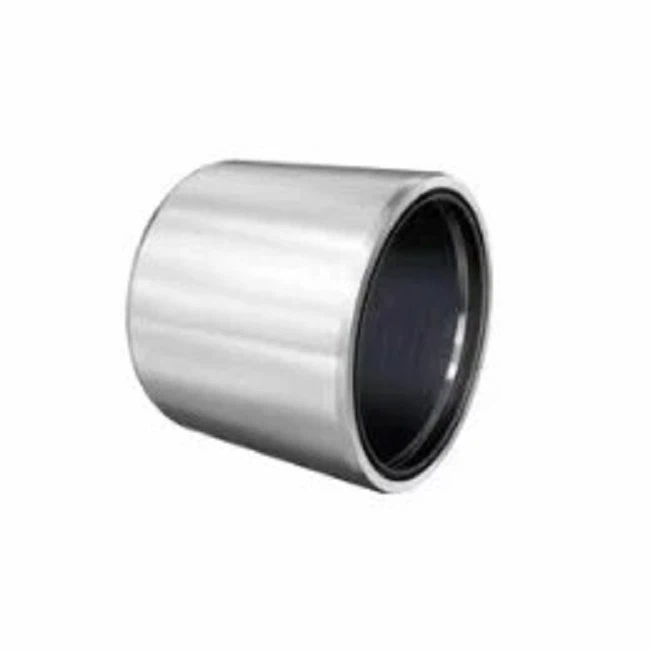
How are Plain Bearings Applications?
Plain bearings, also known as sliding bearings, are commonly used in a wide variety of applications where there is relative motion between two surfaces. Here are some common applications:
Automotive industry: Plain bearings are used in various parts of automobiles, including engines, suspension systems, steering systems, and transmission systems.
Industrial machinery: Industrial machinery such as pumps, compressors, and turbines rely on plain bearings for their smooth operation.
Aerospace: In the aerospace industry, plain bearings are used in landing gears, engine mounts, and control surfaces.
Agriculture: Plain bearings are used in agriculture equipment such as tractors, harvesters, and cultivators.
Medical equipment
Various medical equipment like MRI machines, hospital beds, and dental chairs use plain bearings.
Marine industry
Marine industry applications include propeller shafts, rudder bearings, and winches.
Construction
Construction machinery like cranes and excavators use plain bearings extensively.
What Materials are Plain Bearings Made of?
Plain bearings, also known as sleeve bearings, are typically made of a variety of materials including:
Bronze: This is one of the most common materials used for plain bearings. It provides good resistance to wear, corrosion, and deformation under load.
Steel: Plain bearings made from steel are used in high-load and high-speed applications. They have excellent strength and can withstand a wide range of operating temperatures.
Graphite: Graphite plain bearings are used in high-temperature applications and offer low friction and good self-lubrication properties.
Plastic: Plastic plain bearings are lightweight and cost-effective. They offer low friction and good resistance to corrosion and chemicals.
Ceramic: Ceramic plain bearings are used in high-temperature and high-speed applications. They offer excellent wear resistance and can operate in harsh environments.
The material used for plain bearings depends largely on the specific application requirements.
There Are Several Important Dimensional Specifications for Plain Bearings
Bushing clearance
Bushing clearance is the distance in the radial movement of the shaft that rides within the bushing. The operational clearance is different than the initial internal clearance. The initial clearance is always greater than the operational clearance because the bushings are expanded or compressed by interferences fits. This causes differences in thermal expansion of the bearing rings and mating components. When selecting a plain or sleeve bearing, the internal clearance should be selected based on the appropriate mounting and normal operating conditions to get the suitable operational clearance.
Bearing id and od
Bearing ID and OD is the inside diameter (ID) and the outside diameter (OD) of the bushing, not including the flange.
• Length
Describes the overall length of the plain or sleeve bearing.
• Loading
Loading of the bearing is important to calculate when making a selection. The maximum load a of a bearing is given as pounds per square inch with the maximum load capacity for static of load speed applications being 1/3 of the bearing materials compression limit.
• Rotating speed
Rotating speed rating is related to several factors, such as bearing material, lubrication, alignment, shaft surface finish and shaft hardness.
• PV value
PV value is the product of the specific load (P) and the sliding speed (V). It has a significant influence on the service life of the bushing and is important to consider when designing around the application. The lower the PV value the longer the bushing's life.

How a Plain Bearing Works
Plain bearings work by reducing friction between two moving surfaces through the use of a smooth steel or bronze surface and a lubricating oil or grease. When two surfaces move against each other, the friction can cause damage, wear and tear. Plain bearings prevent this by having one stationary surface and one moving surface. The moving surface is usually a shaft or rod that rotates or slides on the stationary surface. The stationary surface is the bearing surface, which is often made of steel or bronze.
The bearing surface is matched with the shaft according to their shape, size, and tolerance. The bearing supports the weight of the shaft and reduces the amount of friction and wear on both parts. The surface of the bearing is usually coated with oil or grease to prevent friction and wear during movement.
In operation, the shaft is supported in the bearing by a layer of lubricating oil or grease. The oil or grease creates a boundary layer that prevents the metal surfaces from coming into direct contact with each other, reducing friction and wear. As the shaft rotates or moves, the oil or grease lubricant gradually wears away, and new oil or grease is added to maintain the boundary layer.
Plain Bearings Manufacturing Process
Preparation of raw materials: Choose suitable bearing materials, such as steel, copper, iron, etc., and ensure the quality and reliability of the materials.
Material Cutting: According to the design requirements, the selected bearing materials will be cut and tailored to get the required prototype of bearing parts.
Heat treatment: Heat treatment is carried out on the cut bearing materials to increase the hardness and strength of the materials and to improve their wear and corrosion resistance.
Outer ring machining: Lincluding turning, grinding and gear grinding process of outer ring to obtain accurate roundness and size.
Inner ring machining: Processing of the inner ring, including turning, grinding, tooth grinding, etc., to ensure the precision of fit with the outer ring and smoothness of movement.
Slideway machining: Slideway is one of the key parts of the bearings, which needs to obtain smooth surface and precise dimension by grinding or broaching and other processes to ensure the stability and rated load carrying capacity of the bearings.
Lubricating oil hole machining: Lubricating oil hole machining is carried out in the appropriate position of the bearing, which is used for injecting bearing lubricating oil, reducing friction and wear, and improving service life.
Assembly: The machined outer ring, inner ring, slideway and other parts are assembled to ensure the correct fit and assembly quality of the bearings through suitable assembly process and tools.
Inspection: Carry out quality inspection of the bearings, including appearance inspection, size inspection, fit inspection, etc., to ensure that the quality and performance of the bearings are in line with the design requirements.
Lubrication: After the bearings are assembled, inject appropriate amount of lubricating oil or grease to ensure sufficient lubrication and cooling of the bearings during operation.
Packing and leaving factory: Pack the bearings which have passed the test, including measures of cleaning, dustproof and shockproof, etc., so as to be safely transported and used.
Uses of Plain Bearings
Automobiles: Plain bearings are used in various automobile components such as crankshaft, connecting rods, camshaft, and piston pins.
Industrial machinery: Plain bearings are commonly used in various industrial machinery components such as pumps, compressors, engines, turbines, and gearboxes.
Aerospace industry: Plain bearings are used in aircraft engines, landing gear, and control systems.
Electrical power generation: Plain bearings are used in hydroelectric turbines, generators, and wind turbines.
Marine industry: Plain bearings are used in ship propellers, steering gears, and winches.
Construction machinery: Plain bearings are used in heavy-duty construction machinery such as excavators, bulldozers, and cranes.
Medical equipment: Plain bearings are used in medical equipment such as MRI machines and CT scanners.
Sports equipment: Plain bearings are used in sports equipment such as inline skates, skateboards, and bicycles.
Household appliances: Plain bearings are used in various household appliances such as washing machines, dryers, and air conditioners.
Agriculture: Plain bearings are used in agricultural machinery such as tractors, cultivators, and harvesters.
How to Choose a Plain Bearings?
1
Determine the load capacity required: Consider the weight and force that the bearing will need to support.
2
Consider the speed of operation: Different bearings are designed to operate at different speeds. High-speed applications require bearings that can handle high rotational speeds.
3
Determine the temperature range: Some bearings are designed to withstand extreme temperatures, so if you are working in an environment with high temperatures, choose a bearing that can handle it.
4
Identify the type of bearing material: Different types of bearing materials offer varying levels of wear resistance, corrosion resistance, and load capacity. Common plain bearing materials include bronze, plastic, and graphite.
5
Consider the lubrication requirements: Bearings require lubrication to function properly, and the lubrication required will depend on the bearing material and the type of application.
6
Look at the application requirements: Consider factors such as the size of the equipment, any environmental contaminants, and any specific regulations or standards that must be met.
7
Consult with a bearing supplier: A bearing supplier can provide guidance on selecting the right plain bearing for your application based on your specific requirements.
Plain Bearings Operational Specifications
Plain bearings, also known as bushes or sleeves, can be used in a variety of applications including automotive, industrial, and aerospace. The operational specifications for plain bearings depend on factors such as the material used, the load requirements, the speed, and the environment in which they operate. Here are some general guidelines for plain bearing specifications:
01/
Load capacity: The load capacity of a plain bearing is the maximum load it can support without failing. This depends on the material, geometry, and surface area of the bearing. The load capacity of a bearing should be selected based on the maximum expected load in the application.
02/
Speed: The maximum speed that a plain bearing can handle is limited by the heat generated due to friction. The speed limit for a particular bearing should be determined by considering its geometry, the lubrication used, and the operating temperature.
03/
Lubrication: Lubrication is essential for the proper functioning of a plain bearing. The lubricant forms a film between the bearing and the shaft, reducing friction and wear. The type and amount of lubricant required depend on the bearing material and the operating conditions.
04/
Temperature: The temperature in which the plain bearing operates affects its performance. High temperatures can cause the lubricant to degrade, reducing its effectiveness. Low temperatures can cause the lubricant to thicken, increasing the friction between the bearing and the shaft.
05/
Environment: The environment in which the plain bearing operates should also be considered. Some materials may corrode in certain environments, while others may be affected by moisture or chemical exposure.
06/
Maintenance: Proper maintenance is crucial for the long-term performance of plain bearings. Regular inspections, cleaning, and lubrication can help extend the life of the bearing.
Our Factory
SUN AUTOMATION GROUP LIMITED nearly 40 years of bearing support and industrial service experience. We have a stock warehouse and provide a variety of stock bearings. For special and rare ones, we can distribute the goods to the agents in the country of origin of each brand, and the MOQ is as low as 1 set. SUN AUTOMATION GROUP LIMITED has the ability to provide customers with professional bearing solutions. Quality, value and service are the industry that our company is based on.
Our warehouse has one of the largest stocks. We can guarantee direct delivery, and timely delivery and ensure the primary source. If special bearings are not stocked, we can allocate cargo from the agents of original countries such as Sweden, Germany, the U.S.A., and Japan.


FAQ
We're well-known as one of the leading plain bearing manufacturers and suppliers in China. If you're going to buy high quality plain bearing with competitive price, welcome to get more information from our factory.
M518410, High Speed Precision Bearing, 130 25 500