
Your Professional Thin Section Bearing Manufacturer in China!
Our company was founded in 1986 and had been focusing on exporting high bearing ever since. We have a stock warehouse and provide a variety of stock bearings. For special and rare ones, we can distribute the goods to the agents in the country of origin of each brand, and the MOQ is as low as 1 set. We also have the ability to provide customers with professional bearing solutions. We work with professional bearing manufacturers and have invested over 300 million in upgrading product formulas.
Why Choose Us
01/
Rich Experience
There are nearly 40 years of bearing support and industrial service experience in our factory.
02/
Wide Market
Our products have been exported to North America, Europe, the Middle East, Brazil, South Africa, and Mexico and were well acknowledged by clients worldwide.
03/
Timely Delivery
Our warehouse is one of the largest product inventory warehouses. We can guarantee direct and timely delivery, and at the same time, we ensure that you get original sources of goods. If special bearings are not stocked, we can allocate cargo from the agents of original countries such as Sweden, Germany, the U.S.A., and Japan.
04/
Diverse Products
We have conventional various ball, roller, and needle bearings. And we can also provide some uncommon bearings such as non-standard bearings, linear bearings, automobile bearings, and giant bearings, as well as bearing tools such as bearing heaters, etc.
05/
Advanced Equipment
The production line of our factory is fully equipped, including manufacturing and testing machinery. We have an annual output of 5 million sets of bearings. We will check the production equipment regularly to ensure that we can produce higher-quality bearings.
06/
Global Shipping
Our products can be shipped from China to every corner of the world by sea, roadway and air. We ensure that every customer's order arrives on time.
-

CRB 50040 Cross Cylindrical Roller Bearing
The thin section bearings of CRB 50040 are all based on a section that remains constant with Add to Inquiry -
CRB 40070 Cross Cylindrical Roller Bearing
The thin section bearings of CRB 40070 are all based on a section that remains constant with Add to Inquiry -
CRB 40040 Cross Cylindrical Roller Bearing
The thin section bearings of CRB 40040 are all based on a section that remains constant with Add to Inquiry -
CRB 40035 Cross Cylindrical Roller Bearing
The thin section bearings of CRB 40035 are all based on a section that remains constant with Add to Inquiry -
CRB 25040 Cross Cylindrical Roller Bearing
The thin section bearings of CRB 25040 are all based on a section that remains constant with Add to Inquiry -
CRB 25030 Cross Cylindrical Roller Bearing
The thin section bearings of CRB 25030 are all based on a section that remains constant with Add to Inquiry -
CRB 25025 Cross Cylindrical Roller Bearing
The thin section bearings of CRB 25025 are all based on a section that remains constant with Add to Inquiry -
CRB 20035 Cross Cylindrical Roller Bearing
The thin section bearings of CRB 20035 are all based on a section that remains constant with Add to Inquiry -
CRB 20030 Cross Cylindrical Roller Bearing
The thin section bearings of CRB 20030 are all based on a section that remains constant with Add to Inquiry -
CRB 15030 Cross Cylindrical Roller Bearing
The thin section bearings of CRB 15030 are all based on a section that remains constant with Add to Inquiry -
CRB 15025 Cross Cylindrical Roller Bearing
The thin section bearings of CRB 15025 are all based on a section that remains constant with Add to Inquiry -
CRB 14025 Cross Cylindrical Roller Bearing
The thin section bearings of CRB 14025 are all based on a section that remains constant with Add to Inquiry

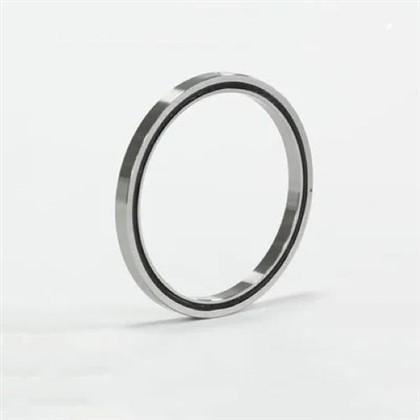


Introduction of Thin Section Bearing
Thin section bearings have very small cross-sections relative to their diameters. This allows designs with smaller design envelope and lower mass, while achieving high rigidity and running accuracy. In contrast to the rolling bearing series, in which the cross-section increases with the bearing diameter, all sizes of thin section bearings of one series have the same cross-section. A larger cross-section can be selected in a graduated way, and thus a thin section bearing with high load carrying capacity can be used without having to alter the shaft diameter. Light and compact designs can be achieved with thin section bearings.
Different Types of Thin Section Bearing
1
Thin Section Radial Ball Bearings
As the name would suggest, thin section radial ball bearings are used for demanding applications with predominantly radial loads. These bearings come in multiple styles and cross-sections, such as open and sealed variants. While they’re best suited for radial loads, they can also accept very minimal axial, reversing, and moment loads.
2
Thin Section Angular Contact Bearings
While radial thin section bearings are designed to handle radial loads, angular contact thin section bearings are best served for higher thrust and axial loads. However, they can also accept some radial and combined loads. Angular contact thin section bearings are commonly paired depending on the needs of an application, which can result in any of the following duplex pairs:
Back-to-back duplex pair
Face-to-face duplex pair
Tandem duplex pair
3
Thin Section Four-Point Contact Bearings
Four-point contact thin section bearings feature a special raceway – also known as a "gothic archway" – that creates four points of contact. This design allows these bearings to do an excellent job of handling moment and reversing loads, plus additional thrust loads. However, four-point contact thin section bearings are not recommended for with in applications with radial and combined loads.
What Are the Benefits of Thin Section Bearings?
Low Cost
While the initial cost of thin section bearings is typically higher than conventional ball bearings, they equate to cost savings over time as they enable more flexibility in design optimizations.
Size
The bearings have smaller cross-sections compared to conventional bearings, and so they can accommodate tight spaces. Also, as bore size increases along with an application's diameter, the bearings' cross-sectional dimensions will remain the same, meaning they won't require additional space in the design.
Weight
The light weight of their cross-sections makes these bearings indispensable for precise designs that have weight restrictions. Additionally, even as bore size grows, the change to the bearings' weight will be inconsequential.
Decreased Friction
These bearings operate with low friction, reducing vibrations and enabling smooth movement and stable axis rotation. As a result, thin section bearings offer optimal running accuracy.
Downsizing the weight and size of your overall design can cut down on manufacturing expenses. Also, thin section bearings play a beneficial role in performance, running stability, action accuracy, and reliability of applications. Despite their width, they still have the capacity to handle large loads with an optimal strength-to-weight ratio. These features make them essential for design work in industries such as robotics, aerospace, and medical and scientific equipment.
Materials for thin section bearings
Chrome Steel
Chromium steel is also known as carbon steel, and this material is one of the most common raw materials for manufacturing bearings. GCr15 bearing steel is a high carbon low alloy steel containing chromium. Due to its compositional properties, this material has excellent strength and fatigue properties at operating temperatures below 200°C. This property makes GCr15 chromium steel an ideal choice as raw material for most thin-section bearings.
Tool Steel
M50 tool steel is a molybdenum type material. The addition of molybdenum gives the material greater resistance to wear and high temperatures. The chemical composition of M50 high-speed steel mainly includes carbon (C), molybdenum (Mo), steel (Fe), chromium (Cr), titanium (Ti), aluminum (Al) and other elements. Among them, the carbon content is between 0.80% and 0.85%, the molybdenum content is between 3.75% and 4.50%, the chromium content is between 3.75% and 4.50%, and the titanium content is between 1.75% and 2.25%. The aluminum content is between 0.75% and 1.25%. In addition, M-50 tool steel has good oxidation resistance and high pressure resistance. These properties make M-50 tool steel an ideal choice for bearings used in environments requiring increased resistance and high temperatures.
Stainless Steel
If the working environment of your bearing is a very high temperature or a clean room, then stainless steel as the raw material of the bearing is ideal to meet your needs. Stainless steel has better corrosion and chemical resistance than standard steel. Stainless steel is therefore a good choice for applications where there is any potential for contamination (such as food processing or semiconductor equipment manufacturing). In addition, stainless steel bearings can better maintain their mechanical properties under special environments such as high temperature, high speed, and high load, making them durable.
Ceramics
All-ceramic thin-section bearings are less common, but hybrid thin-section bearings made of metal inner and outer rings, cages, and ceramic balls are a common option. Ceramics have some special advantages over other steel bearings. First, ceramics are a lighter material than steel. Since the density of ceramic rolling balls is lower than that of steel and the weight is much lighter, the centrifugal effect on the outer ring during rotation can be reduced by 40%, thereby greatly extending the service life. Ceramic balls, especially silicon nitride balls, have the characteristics of low density, high hardness, low friction coefficient, wear resistance, self-lubrication and good rigidity. They are especially suitable for rolling elements of high-speed, high-precision and long-life hybrid ceramic ball bearings.
What Should be Considered When You Choose Thin Section Bearings
Many Sizes and Configurations
Thin section bearings are offered in a variety of standard cross-sections. Designers can choose from radial, angular contact and four point designs. Angular contact bearings have an open design, while radial and four-point contact bearings can be open or have seals to retain lubrication and keep out contaminants. Radial contact bearings are intended primarily for pure radial loads, but with deep ball grooves can accept some thrust load in either direction. If an increased diametral clearance is specified, the contact angle under axial load increases to give greater thrust capacity. Angular contact bearings can support radial and unidirectional thrust load. They are usually mounted in opposed pairs because they require a thrust load to establish the proper contact angle between ball and races. Four-point contact bearings can support any combination of radial, thrust and moment loading. A single four-point contact bearing can often do the job of two angular-contact bearings.
Separators
Radial contact and four-point-contact ball bearings typically have snap-over, continuous ring separators, while angular contact bearings use circular-pocket, continuous ring separators. Standard materials are brass, low-carbon steel, and glass-fiber-reinforced nylon. For applications requiring corrosion resistance or high-speed operation, stainless steel or phenolic laminate separators are often used. Formed wire separators or segmental cages are an alternative when more balls than usual are needed — e.g., high load capacity at low speed. In low speed positioning applications where torque uniformity is a major requirement, ball separation can be accomplished with specially designed helical compression springs, toroid ball spacers.
Seals and Shields
Like other bearings, a thin section bearing performs best when the rolling elements are kept clean and lubricated. This can be accomplished with a seal, which makes positive contact with the inner race, or a non-contacting shield. Speed, torque, and lubricant must all be considered when choosing a seal or shield. A seal is generally more effective, but generates more torque. This results in more heat and reduces the bearing's limiting speed. Integral seals – often chosen to minimize the overall design – are typically molded of nitrile rubber and are reinforced with steel. Where required, separate ring-type seals may be used.
Design Considerations
Thin section bearings can be used to particularly good advantage where bearing cross-section can be specified early in the design process. (And it's important to consider them early, to take advantage of the ripple effect savings noted earlier.) They are best-known for saving space and weight, but have many other advantages. Thin section bearings are excellent choices for applications requiring high stiffness, accurate positioning at low shaft speed, or a combination of radial, thrust, and moment loads. They permit designers to reduce housing sizes without changing shaft size, and use larger shafts to increase stiffness and/or provide space for other components.
Assuring Proper Fit
Changes in external fit can impose significant bearing loads that increase running torque and decrease life. To minimize this effect, the run out tolerances specified for the housing and shaft should be identical to those specified for the bearing. All tolerances – for shaft and housing-bore concentricity, shaft and housing shoulders, and corner squareness of all mounting surfaces – should be specified with care. Thermal expansion, although easily overlooked, is another consideration. Since thin section bearings are often mounted in lightweight structures with thermal expansion rates different from that of bearing steel, particular attention should be given to temperature differentials between shaft and housing. Steel liners between the bearing and its seats are another way to control fit, and special diametral clearances can be provided to allow for changes in internal clearances. As a rule of thumb, it's a good idea to consult the bearing manufacturer when a change in fit creates an interference greater than or equal to the bearing diametral clearance, or a looseness greater than twice the diameter tolerance of the bearing race.
Lubrication and Maintenance
Lubrication requirements for thin section bearings are substantially the same as for conventional bearings. In general, grease is used for pitch-line velocities up to 2,000 FPM and oil at higher speeds. The oil is delivered by a drip feed, flood, mist, or jet system, depending on the speed, operating environment and other conditions. Some high-speed applications do use grease; usually a special type. Maintaining a clean supply of lubricant should be the only maintenance needed, either by filtering the oil or purging and replenishing the grease (if needed). Thin section bearings, when properly selected, mounted and lubricated, perform as well as any other precision bearing, large or small.
Our Factory
Our factory offer standard the thin-section bearings, cross roller bearings, slewing bearing etc. With over 40 years of experience, we can design and manufacture various bearings with inner diameters ranging from 30mm to 6,000mm. Our precision grade can reach class P4 (ABEC7) or higher. We have bearings in stock or half-made rings ready for further production most of the time.

Ultimate FAQ Guide to Thin Section Bearing
Q: What's the difference between DD and DDU in a bearing designation?
A: Both DD and DDU refer to contact rubber seals. The slim wall structure of thin-section bearings makes it impossible to process seal grooves on the inner ring outside diameter, so a DD-type seal lip (seal tip) is applied to a step. Miniature bearings also use the DD type in the same way due to their size. Other standard models use DDU designations.
Q: What is the thin selection bearing used for?
A: Thin section bearings find wide application in fields like instrumentation, robotics, aerospace, medical equipment, cameras and optical instruments, where their unique properties are highly valued. These bearings are particularly favored in applications where space constraints or the need for weight reduction are critical considerations, making them indispensable components in various precision and high-performance systems.
Q: What is the feature of the thin selection bearing?
A: Thin section bearings exhibit low rotational torque and high rotational accuracy, playing a crucial role in ensuring smooth and precise operation across a diverse range of applications. While primarily designed to withstand radial loads, they also demonstrate the capability to support axial loads.
Q: What are the materials of thin section bearings?
A: Rings: Typically crafted from 440C stainless steel for corrosion resistance. An alternative is nodular thin dense chrome (TDC) plating, which adheres strongly and withstands high temperatures. Special bearings are also made from Aluminum, 300 Series Stainless Steel, and 17-4 Stainless Steel.
Balls: Available in materials like 440C and 300 Series Stainless Steel, Silicon Nitride, and M-50 Steel.
Cages: Constructed from materials including brass, nylon, phenolic, and stainless steel, offering different strengths and properties for specific applications.
Balls: Available in materials like 440C and 300 Series Stainless Steel, Silicon Nitride, and M-50 Steel.
Cages: Constructed from materials including brass, nylon, phenolic, and stainless steel, offering different strengths and properties for specific applications.
Q: What is the Difference between Open, Sealed and Shielded Thin Section Bearings?
A: Open Thin Section Bearings: Oil lubricated, with low starting torque and flexible rotation.
Sealed thin section bearings: These bearings have nitrile/BUNA-N rubber or high-temperature seals, effective against dust, moisture, and lubricant leakage. These seals increase friction, reducing bearing speed. At temperatures below -40°C, nitrile rubber and Viton become less effective, making seals or metal shields preferable for extremely cold situation.
Shielded Thin Section Bearings: Feature shields that provide a barrier against contaminants while allowing for some lubrication leakage. Suitable for applications where contamination is a concern, but less stringent than those requiring fully sealed bearings.
Sealed thin section bearings: These bearings have nitrile/BUNA-N rubber or high-temperature seals, effective against dust, moisture, and lubricant leakage. These seals increase friction, reducing bearing speed. At temperatures below -40°C, nitrile rubber and Viton become less effective, making seals or metal shields preferable for extremely cold situation.
Shielded Thin Section Bearings: Feature shields that provide a barrier against contaminants while allowing for some lubrication leakage. Suitable for applications where contamination is a concern, but less stringent than those requiring fully sealed bearings.
Q: What Are The Benefits Of Thin Section Bearings?
A: The size and weight of the design are big draws for businesses in need of a bearing that can operate effectively in applications with very tight space limitations or weight concerns. Another advantage is that thin section bearings can be produced quickly, which is important for businesses that need bearing products right away without sacrificing on quality and performance.
Q: How do I know which bearing to use?
A: Determine the rotational speed of your application. High speeds (RPM) usually work best with ball bearings, and lower speeds usually work best with roller bearings. You also want to determine what kind of run out your application will allow.
Q: How to determine the size of a bearing?
A: Determining the size of a ball bearing can be done by measuring its outer diameter (OD), bore size (ID), and width. These measurements are usually expressed in millimeters (mm). Using a caliper or a micrometer, you can accurately measure these dimensions.
Q: How do bearings work on a shaft?
A: Friction is bound to occur between the rotating shaft and the part that supports the rotation. Bearings are used between these two components. The bearings serve to reduce friction and allow for smoother rotation. This cuts down on the amount of energy consumption.
Q: What is the use of crossed roller bearing?
A: For example, crossed roller bearings are well-suited for airplane seat adjustment mechanisms thanks to their high load capacity, high accuracy and rigidity. They are also used in ground based radar systems, and their small size also makes them ideal for swivel mechanisms in military surveillance cameras.
Q: How do you identify bearing problems?
A: Insight article - Insight - Acorn Industrial Services ltd
If your bearing is suddenly noisy during operation, you're looking at a bearing failure. This excess noise is created when the raceways of the bearing have become damaged, causing the rolling elements to bounce or rattle during rotation.
If your bearing is suddenly noisy during operation, you're looking at a bearing failure. This excess noise is created when the raceways of the bearing have become damaged, causing the rolling elements to bounce or rattle during rotation.
Q: How Lubrication Affects Bearing Performance?
A: Proper lubrication keeps bearing performance optimal and extends the life of a bearing. Lubricants act to form a protective film separating the rolling contact services to prevent direct contact between metal components. Such contact causes friction and heat that prematurely wears the bearing. Performance issues caused by corrosion are also mitigated through the use of lubricants. For these reasons, using the most suitable lubricant for the application is important.
Q: What tool is used to measure bearing size?
A: Measuring bore cage
To measure the bore of a bearing, you can use a vernier caliper. Insert the outer anvils of the caliper into the bore and open the caliper until the bearing and caliper are a good fit about each other. Now read the value on the caliper. In the absence of a caliper, a good quality steel ruler will suffice.
Measuring diameter cages
To measure the outside diameter of a bearing place the jaws of the caliper around the bearing and close it until it's a good fit but not tight, now read the value from the caliper.
Measuring width cages
In the same manner as you measured the outside diameter, measure the width.
To measure the bore of a bearing, you can use a vernier caliper. Insert the outer anvils of the caliper into the bore and open the caliper until the bearing and caliper are a good fit about each other. Now read the value on the caliper. In the absence of a caliper, a good quality steel ruler will suffice.
Measuring diameter cages
To measure the outside diameter of a bearing place the jaws of the caliper around the bearing and close it until it's a good fit but not tight, now read the value from the caliper.
Measuring width cages
In the same manner as you measured the outside diameter, measure the width.
We're well-known as one of the leading thin section bearing manufacturers and suppliers in China. If you're going to buy high quality thin section bearing with competitive price, welcome to get more information from our factory.
61700 2Z Technical Drawing, KA060CP0 Bearing, B7004C P4 Dimensions