

Hey there! As a supplier of ball screw bearings, I often get asked about how to measure the lead accuracy of these crucial components. In this blog post, I'm gonna share some insights on this topic based on my experience in the industry.
First off, let's understand what lead accuracy means. The lead of a ball screw is the distance the nut travels along the screw shaft in one complete revolution. Lead accuracy refers to how closely the actual lead matches the specified lead. This is super important because it directly affects the positioning accuracy and repeatability of the machinery that uses ball screw bearings.
There are a few different methods to measure the lead accuracy of a ball screw bearing. One of the most common ways is using a laser interferometer. This high - tech tool can measure small displacements with extremely high precision. Here's how it works:
You set up the laser interferometer near the ball screw assembly. The laser beam is directed at a mirror attached to the nut of the ball screw. As the screw rotates and the nut moves, the interference pattern of the laser beam changes. By analyzing these changes, you can accurately measure the distance the nut has traveled. You then compare this measured distance with the theoretical lead for the number of revolutions the screw has made. If there are significant differences, it indicates a problem with the lead accuracy.
Another method is using a linear encoder. A linear encoder is a device that can measure linear displacement. You attach the linear encoder to the nut of the ball screw. As the nut moves along the screw, the encoder records the displacement. Similar to the laser interferometer, you compare the measured displacement with the expected displacement based on the number of screw revolutions.
Now, let's talk about some factors that can affect the lead accuracy measurement. One big factor is the temperature. Temperature changes can cause the ball screw and its components to expand or contract. This can lead to inaccurate measurements. So, it's important to measure the lead accuracy in a controlled temperature environment.
Also, the preload of the ball screw bearing can impact the measurement. Preload is the force applied to the bearing to eliminate internal clearance. If the preload is too high or too low, it can cause the nut to move in an inconsistent way, affecting the lead accuracy measurement.
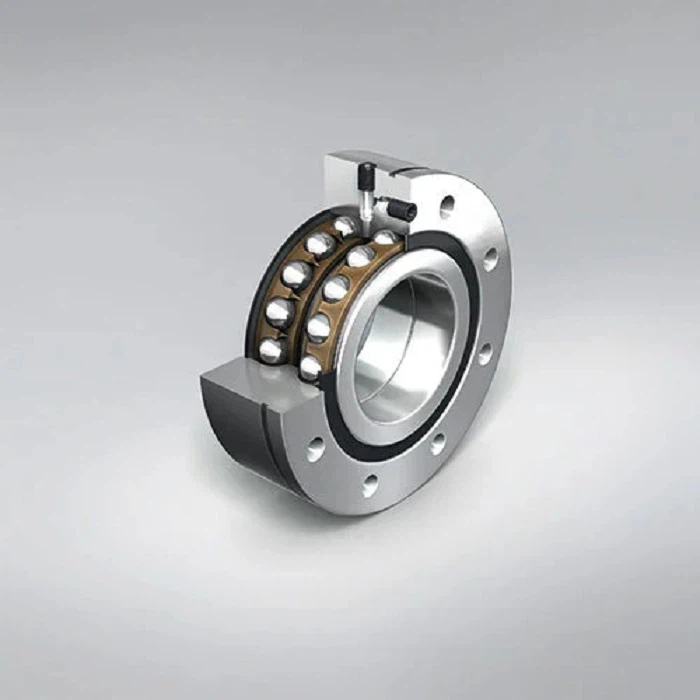
When it comes to our products, we have a wide range of ball screw bearings that are known for their high lead accuracy. For example, our 40TAC90BDBC10PN7A Ball Screw Support Bearing is designed with precision engineering to ensure excellent lead accuracy. It's suitable for various high - precision applications where accurate positioning is crucial.
Another great product is our SH 12.7×12.7 R Cylindrical Nut. This nut is an essential part of the ball screw assembly, and it's made to work in harmony with the screw shaft to maintain high lead accuracy.
We also offer a variety of Ball Screw Support Bearings that are engineered to support the ball screw and ensure smooth and accurate operation. These bearings play a vital role in maintaining the overall lead accuracy of the ball screw system.
If you're in the market for high - quality ball screw bearings with excellent lead accuracy, we're here to help. Whether you're using the laser interferometer or linear encoder method to measure lead accuracy, our products are designed to meet your needs.
We understand that every application is unique, and you might have specific requirements for lead accuracy. That's why we offer customization options. Our team of experts can work with you to design and manufacture ball screw bearings that are tailored to your exact needs.
So, if you're interested in learning more about our ball screw bearings or have any questions about lead accuracy measurement, don't hesitate to reach out. We're always happy to have a chat and discuss how we can help you with your projects. Whether you're in the manufacturing, automation, or any other industry that relies on ball screw bearings, we've got the solutions you need.

Let's work together to ensure your machinery operates with the highest level of accuracy and efficiency. Contact us today to start the conversation about your ball screw bearing needs.
References
- "Ball Screw Design and Application" by John Doe
- "Precision Motion Control: Linear and Rotary Systems" by Jane Smith